
How to Check an SEO Specialist's Integrity: A Checklist
Without optimization, it’s impossible to achieve high traffic on your resource and attract new visitors to your site, making the choice of an SEO specialist a very responsible and important task. We’ve prepared a checklist that highlights what to look for when choosing an SEO specialist, the qualities they should possess in their field, and how to determine whether to bring them on board.
It might seem that finding an SEO specialist nowadays is quite simple: there are freelancer exchanges and numerous job vacancies on job search platforms. But how honest and transparent is everything? Are these specialists really so impressive that they can effortlessly help your site reach the next level? Follow these tips.
Key Rules for Evaluating a Candidate for the SEO Specialist Position
When selecting a candidate, you should rely on two main rules:
1. Check Their Case Studies
This is the most obvious, yet labor-intensive check. Simply presenting a case as "this was the situation, and here’s what it became" isn’t entirely accurate. There’s no guarantee that the specialist was genuinely involved with the project or handled those specific tasks.
You need a detailed case study that describes what the candidate did, how, and when. The case should include charts and analytics. Additionally, the SEO specialist can provide guest links to website analytics services and position snapshots to demonstrate their skills.
As you review the case, you may have questions that the candidate should be able to answer with ease.
For a quick analysis of the websites your candidate has worked on, use the Website Analysis. This tool will analyze key SEO parameters, meta tags, technical parameters, and display the indexing dynamics, page positions, link profiles, and other important metrics, allowing you to gauge the quality of work done on the site.
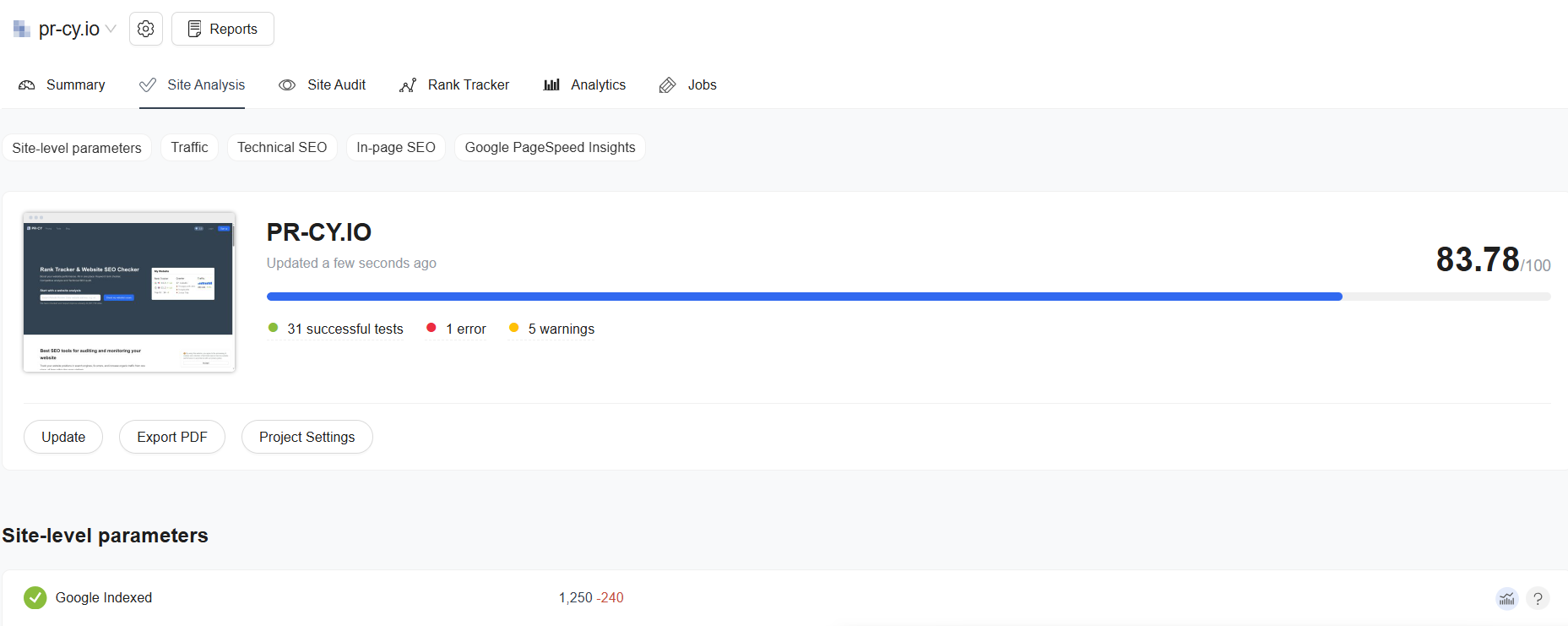 Website Analysis Interface
It's important to remember that you’re interviewing a person, not a superhero. Everyone has their successes and failures. If the candidate responds to a direct question about mistakes and failures with "I've never made any," it’s a good reason to be skeptical. There's nothing wrong with discussing an example of a project that didn’t go well and the lessons learned from it. An honest candidate is better than one with hidden flaws.
2. Ask the Candidate to Complete a Test Task
After the candidate has successfully passed the interview and their case studies have been verified as genuine and impressive, don’t rush to give them the job right away. It’s possible that the candidate is simply good at talking, but might falter when it comes to actual work tasks.
A test task helps you understand how the candidate navigates different situations and solves work-related problems.
If you want to give a free test task, it shouldn't take more than two hours. For a full-fledged work task, you aren’t quite at that stage of the relationship yet.
We recommend creating the test task yourself rather than using a ready-made one from the internet. Most likely, the answers are already available online, and the candidate might simply know how to use Google.
It’s a significant plus if the candidate has knowledge beyond just one area. Skills in using site analysis software and basic technical knowledge will give the SEO specialist additional points.
What a Candidate Can Provide at an Interview
Additionally, you can ask the specialist to confirm their experience and qualifications by providing the following information.
1. Client Reviews
Ask the candidate to provide reviews from clients they have previously worked with or links to resources they have promoted. This way, you can contact the client and get feedback about the candidate.
2. Certification
It's a big plus if the candidate has certificates or other credentials from online schools or other educational institutions in the field of SEO. However, this does not guarantee that they possess more knowledge than just the certificates. Sometimes, self-taught individuals have more useful experience and knowledge.
3. Additional Interview Stage
When hiring, the interview can be conducted not only with the department head but also with the director or other senior management. If the candidate is approved at multiple levels, it increases the chance of their successful performance.
SEO Specialist Effectiveness Checklist
At the interview, the candidate stood out, their case studies met your expectations, and they had positive reviews, certifications, and knowledge. The specialist has even been working for some time, but how effective are they really?
In the early stages, it’s too soon to judge any significant results. It’s recommended to conduct periodic evaluations every six months to a year to assess the specialist’s effectiveness. This allows the specialist to demonstrate their ongoing knowledge and new experiences.
A good and responsible specialist should continuously grow and be familiar with tasks not only within their department but also have basic knowledge in other areas. SEO is a comprehensive set of tasks aimed at optimizing various website metrics, so knowledge in only one area is often insufficient.
To evaluate, use a checklist that will help you assess the specialist’s level. The following parameters need to be checked.
Key Technical Tasks
Tag placement, knowledge of placing tags on different CMS, proper configuration of robots.txt, generation and placement of sitemap.xml, and specifying its address in Google Search Console.
- Tag Placement. Ensure that tags are placed correctly, meaning the title and description should appear only once on the page. There should be no line breaks within the tags, the tag should not be cut off, and it should start with title, description and end with /title, /description. Tags should be placed in head. You can verify how the candidate worked with tags on their portfolio site using an online On-Page SEO Checker.
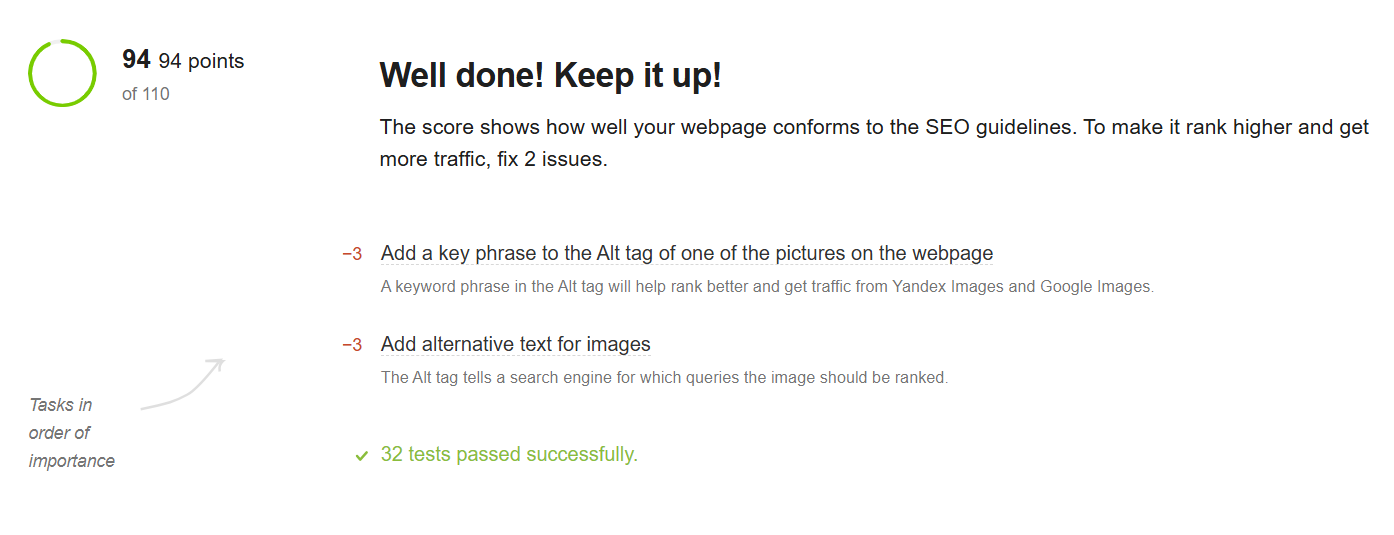 On-Page SEO Checker Interface
-
Robots.txt Configuration. The file should block indexing of personal account pages, search pages, login/registration pages, filter pages, and other service pages. Images and fonts should be open for indexing. The sitemap should be specified. User-agent for the Google bot should be included.
-
Sitemap Generation. An auto-updating sitemap should be generated, containing no service pages, and all pages should be accessible via HTTPS. The sitemap should be added to Google Search Console.
Competitor Analysis
Check how thoroughly the specialist conducts competitor analysis and what solutions they can propose for the website based on this analysis. Evaluate how they examine search engine results, what they focus on when analyzing competitors (usability, content, tags). You can assess the SEO specialist’s work on a site from their portfolio using an online tool Analysis of the TOP Results of Google by Keywords.
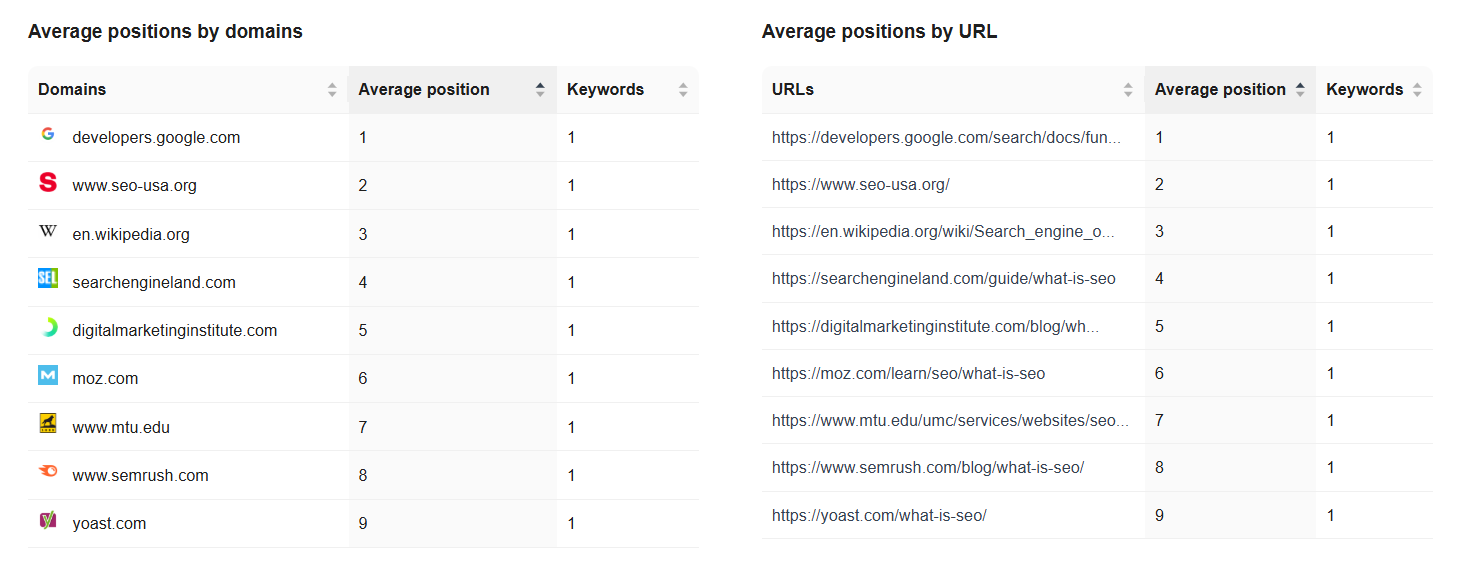 Analysis of the TOP Results of Google by Keywords Interface
Semantic Core for the Site
Verify how the specialist creates meta tags like title, description, and H1 headings, whether they use keywords appropriately, and ensure they don't overdo it.
Working with Pages
Check how the specialist filters pages using software, how they select pages for tag adjustments, alt text updates, and semantic core collection.
Site Usability
Evaluate how the specialist identifies UX errors: issues in the header, footer, button placement, forms usability, and the functionality of all elements.
Backlink Profile
Examine how the specialist manages the site's backlink profile and their ability to assess link quality. Look at how they use link analysis tools, evaluate donor site ratings, and their relevance for link purchases.
Working with Analytics Tools
Assess the specialist’s ability to analyze data, navigate through different tools, and generate reports.
Behavioral Factors
Check if the specialist can evaluate behavioral factors, compare segments, determine which queries users use to access specific pages, and create a user profile.
For additional verification, order an SEO audit from an external company to check the current state of the website and compare the report with the specialist's results.
What to Do If Your SEO Specialist Fails the Evaluation
If there are no visible results from their work, even on the horizon, you don't need to immediately consider parting ways with the employee. There are alternative approaches to address the issue without taking drastic measures.
First and foremost, you should:
- Identify the Problem. Understand where the issue lies and why the employee isn't producing results. It might be that their methods are not effective, which means it's time to share your expertise or that of your colleagues.
- Develop a Plan. Create a plan of action together with the employee to resolve the problem. It’s worth giving the specialist a chance if they are willing to analyze their mistakes and figure out what in their approach is hindering their success.
It's important to try resolving issues amicably first. Open and honest communication with the employee can help avoid unnecessary conflicts and complications. However, if the employee is uncooperative, denies their mistakes, and insists they are right without considering other perspectives, it may become necessary to part ways.
Listen to Reason
In this article, we've outlined the main steps for evaluating a candidate for the SEO specialist role and for employees already on your team. These recommendations can be helpful, but ultimately, the outcome depends on the specifics of your business, your requirements for the specialist, and the current state of your website. Focus on the actual impact of the specialist's work, collaborate to solve problems, and aim for mutually beneficial cooperation.
🍪 By using this website, you agree to the processing of cookies and collection of technical data to improve website performance in accordance with our privacy policy.