
How to Optimize Website Content for AI Search
At the end of 2024, Google lost part of its dominant position in the search engine market: its share decreased to 89.73%. The main reason lies in the rapid growth in the popularity of artificial intelligence technologies.
People have increasingly turned to smart assistants such as ChatGPT and Gemini services. These tools offer quick and accurate answers, which significantly changes the market situation and impacts the competition for ranking positions.
Artificial intelligence is actively changing the usual search algorithms, prompting businesses to reassess their promotion strategies. The primary task is to create content that meets the needs of not only users but also AI systems.
What are AEO and AIO
AEO (Answer Engine Optimization) is a method of adjusting content so that artificial intelligence algorithms can select it as the most suitable answer to a user's query. The goal of AEO is to make the information on a website as comprehensible as possible for neural networks and AI assistants.
There is also the concept of AIO (Artificial Intelligence Optimization). This method aims to make the content of a resource preferable for AI-powered search engines.
Today, there is no clear distinction between the terms. Both concepts describe the same thing: optimizing a website for interaction with AI algorithms. Webmasters use either the term AEO or AIO, depending on their preferences.
How AEO Works
When it comes to traditional search engines like Google, their operation is based on keywords. When you input a query into the search engine, it evaluates and ranks websites, presenting you with a list of links.
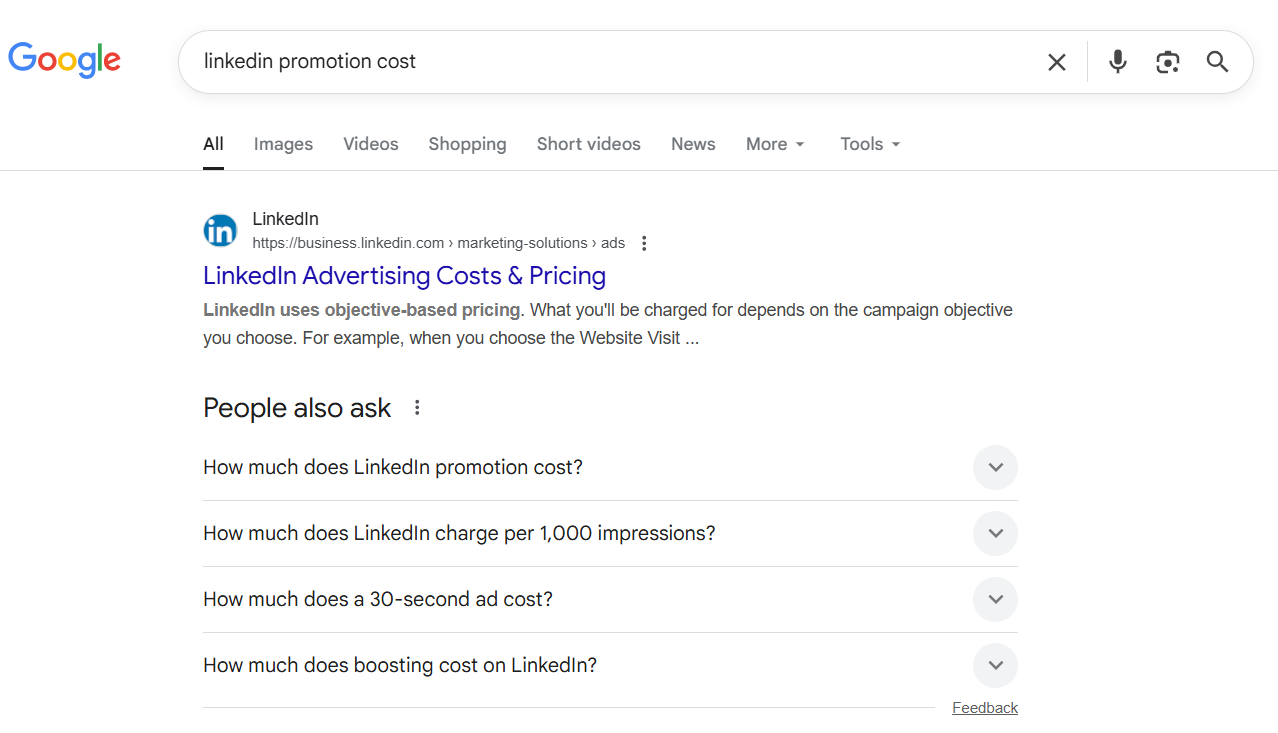 Search Results for a Query in Google
AI, however, operates on a different principle—it analyzes information independently, following a specific algorithm.
First, AI attempts to understand exactly what the user wants to find out. It takes into account not only the content of the query but also the context, possible hidden meanings, and the user's preferences.
After this, the tool either refers to its knowledge base, which is formed from vast amounts of data, or, if it has access to real-time search, it analyzes current information.
Based on the obtained data, AI formulates a response that most accurately and comprehensively answers the query. The response is user-friendly and often accompanied by links to utilized sources, allowing the user to delve deeper into the topic.
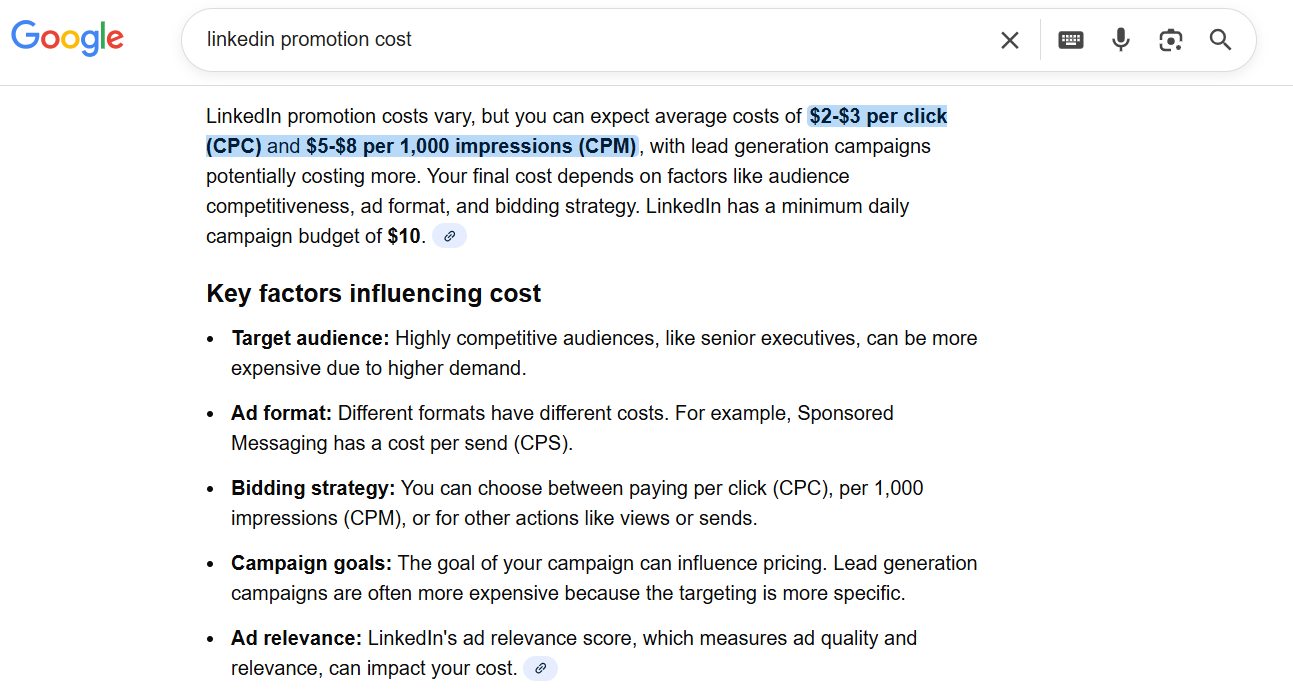 AI-Generated Search Results for a Query in Google
How to Optimize Content for AI Search
Have you ever wondered why AI assistants sometimes overlook high-quality content? Yes, even if the material is created with all SEO standards in mind, it might not make it into the search results.
The reason is simple: artificial intelligence algorithms focus on the technical aspects of the content. They select data that is easily structured, quickly processed, and allows for extracting the necessary information without extra effort. Other aspects, such as the usefulness or depth of the article, play a secondary role for AI.
To ensure your materials start attracting the attention of AI assistants and make it into the search results, it is important to use a comprehensive approach: simultaneously work on the content, technical aspects of the resource, external factors, and analytics.
Working on Content
High-quality content has always been and remains the foundation of successful SEO. Regularly publishing useful articles on the website, as well as proper interlinking between them, helps both search engines and AI-based tools perceive your resource as authoritative.
Enhance Content with Structured Data
Structured content plays an important role in the generative responses of neural networks. To facilitate the perception of information by algorithms, use different level headings (H1, H2, H3) and divide the text into small paragraphs containing 3–5 sentences.
Bullet points, numbered lists, as well as tables, diagrams, and infographics help make the article visually clear and accessible. An important part is the first paragraph, where a brief answer or main conclusion is given: this helps quickly highlight the key ideas.
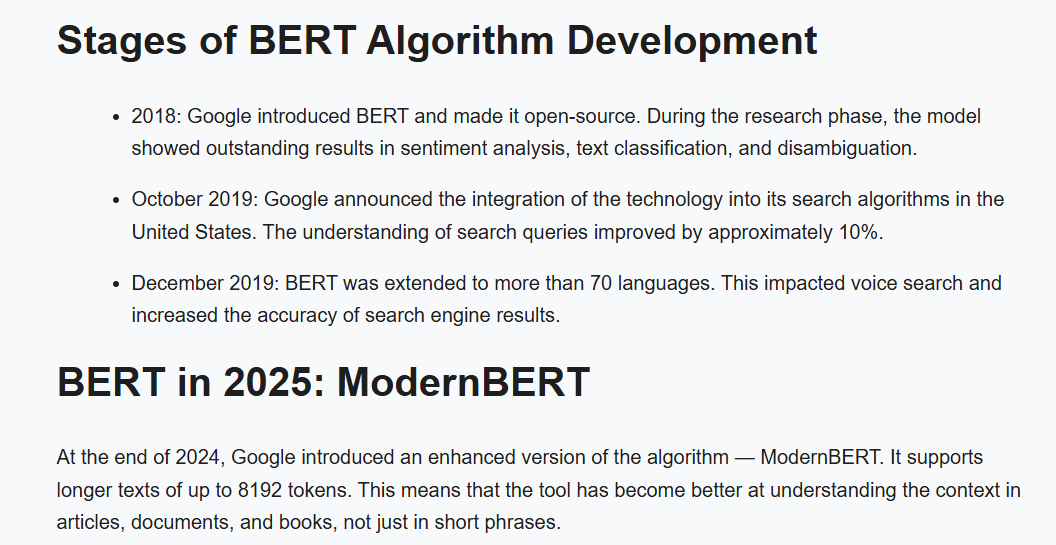 Example of an Article with Structured Content
Another useful technique is dividing the text into logical blocks with highlighted key points. This also helps avoid overloading the reader and informational chaos. Long texts without subheadings or visual elements often get lost in the data flow and are harder to perceive.
Key thoughts are better placed in compact paragraphs or formatted as a list. Additionally, a FAQ block can be included at the end of the article — it is perfect for concise answers.
Try to stick to a concise style. Avoid complex constructions and long sentences: the simpler and more accurately the information is presented, the easier it is for algorithms to process.
Add Properly Formulated Queries
It is crucial to consider how individuals phrase their questions to artificial intelligence. Approximately 20.5% of people worldwide prefer using voice search, with 27% of these searches being conducted from mobile devices. Every month, over one billion voice queries are made — an impressive figure, wouldn't you agree?
People formulate questions differently when using voice search compared to typing queries. As a result, modern queries are increasingly becoming full sentences rather than short keywords. They sound natural, like conversational speech.
It is essential to focus on natural conversational formulations, which often include long, low-frequency queries. These can be integrated into headings, subheadings, or even the opening sentences.
Include Specific Data
Strive to enrich your content with specific information. Statistics, dates, figures, and examples significantly increase the likelihood that your text will be selected for responses.
For instance, instead of making a general statement like "business is growing rapidly," it is better to write: "In the first quarter of 2025, the company increased its revenues by 20%." Such data not only make the publication more convincing but also more useful for AI algorithms.
Comparisons also play a critical role. Tables, lists of pros and cons, or "A versus B" sections help structure the article and clearly explain the differences between objects or phenomena.
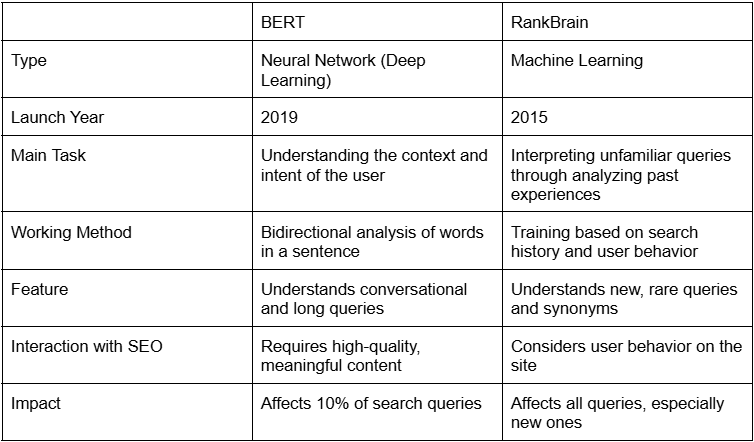 Example of a Table in an Article
Include Quotes and References to Authoritative Sources
Do not miss the opportunity to add quotes from experts or links to authoritative studies. Mentioning the opinion of a well-known analyst or citing a scientific article will add weight and credibility to your content. For AI, text with quotes and references becomes part of a verified informational chain.
However, it is important not to overdo it. The content should not turn into a collection of others' statements. Choose one or two truly strong quotes or links that will fit organically into your article.
Optimize Titles and Descriptions for AI
Your page title should still clearly reflect its main topic, but now it is important to consider how artificial intelligence may present your resource.
For example, if a model mentions your resource as a source, it might say something like: "...according to [Site Name]...". To ensure your brand is immediately associated with the subject matter, it is advisable to embed it in the title. Imagine your platform is called "TechJournal." Then a title like "Television Reviews (TechJournal)" instantly conveys that this publication is about technology.
Do not forget about the meta-description: it serves as a kind of brief summary of your page. Many search engines may use its formulations. Try to state the main assertion and include unique information that sets your material apart.
AI Meta Description Generator can help you create titles and descriptions for your page using artificial intelligence.
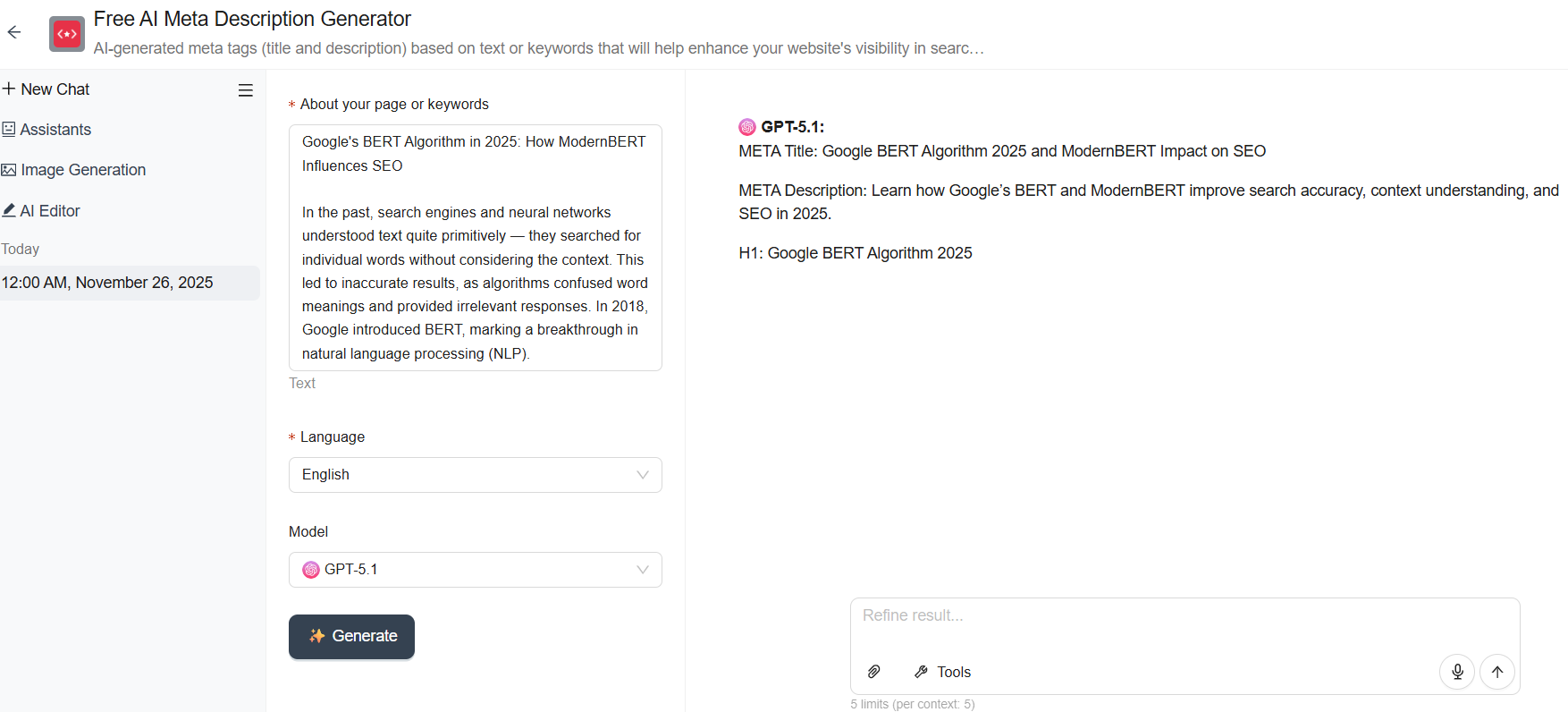 AI Meta Description Generator Interface
Use Clustering for Articles
Keywords are gradually losing their significance in ranking. Modern algorithms evaluate content not only based on its relevance to a query but also on thematic interconnections within the site. If your article is not linked to other materials and does not cover related topics, its value for AI search diminishes.
It is important for search engines to see your content in the context of a broad thematic structure. It is better to follow the rule: one page — one subtopic, but link it to other materials.
Internal linking, for example, through "See also" blocks, will help improve the perception of the resource.
Constantly Update Information
Updating content is an important step to show artificial intelligence that your site pages always feature up-to-date information. Special attention should be paid to statistics, dates, and current trends.
Working on the Technical Side and UX
Both traditional search engines and AI bots pay special attention to technical functionality. Fast page loading, ease of use on mobile devices, and clear structure all influence how your resource will be evaluated.
If your page is poorly indexed or has low user experience metrics, it may not be considered a candidate by AI.
Use Markup
Microdata allows you to compactly present the content of pages, making your resource more accessible for understanding by search algorithms and AI assistants.
Several widely used microdata formats exist: Schema.org, JSON-LD, and Open Graph. Among them, Schema.org is the most popular. It can be used to describe various site elements: articles, products, instructions, frequently asked questions.
Pay special attention to schema types like FAQPage, HowTo, Article, and Product. Additionally, do not forget to specify metadata for images, including alt and title attributes.
It is important to apply microdata only for valuable and unique content to avoid discrepancies between the data in the markup and the actual content of the page.
Make Content Modular
Each section should be self-contained, with clear subheadings and a logical HTML structure. For better content organization, create thematic groups (a main page with an overview + subpages with a deeper dive into the topic) and connect them with internal links.
Do Not Forget About Multimodality
Use tables, images with descriptions and alt texts, and avoid dependence on JavaScript so that your content remains accessible.
Ensure the Openness of Your Site for AI
Do not block bots (such as GPTBot or Googlebot), use server-side rendering, and avoid settings that prohibit indexing (noindex/nosnippet).
Working on External Factors
Enhance Your Authority
Modern algorithms can assess the level of expertise of an author, making it crucial to collaborate with professionals in specific fields.
To increase trust in your content, it is essential to meticulously craft the author's profile. Include their photo, a brief description of their professional achievements, and links to reputable social media or a personal website.
The growth of a resource's authority also depends on the brand being mentioned in reliable sources, such as the media. Engage in content marketing: publish guest articles, arrange collaborations with journalists, and feature your materials on popular media platforms.
Simple SEO-optimized texts are losing relevance and giving way to articles that demonstrate a high level of knowledge. Rely solely on verified information sources in your content, especially when dealing with EEAT topics: medicine, finance, or law.
Understand Your Target Audience's Interests and Intentions
To promote content in AI search results, it is crucial to focus on the interests and needs of your audience, not just on keyword selection.
Keyword stuffing has lost its effectiveness because AI algorithms simply ignore such publications. Ensure that your article helps readers solve their problems, answers their questions, and genuinely provides value.
When creating content, consider user intent and understand what information they expect to receive when entering a specific query. For instance, if someone is looking for information on assembling a shelf, a step-by-step guide would be more helpful than general thoughts on interior design.
A friendly and comprehensible communication style is the foundation for successful interaction with readers. Imagine you are speaking to them personally, using simple and accessible language.
Increase User Engagement
Although generative technologies can provide information instantly, you can still influence algorithms through user behavior. If users navigate to your site from search results, keep their attention as much as possible.
Multimedia works well here: images, videos, and infographics make an article more appealing and increase the time spent on the page.
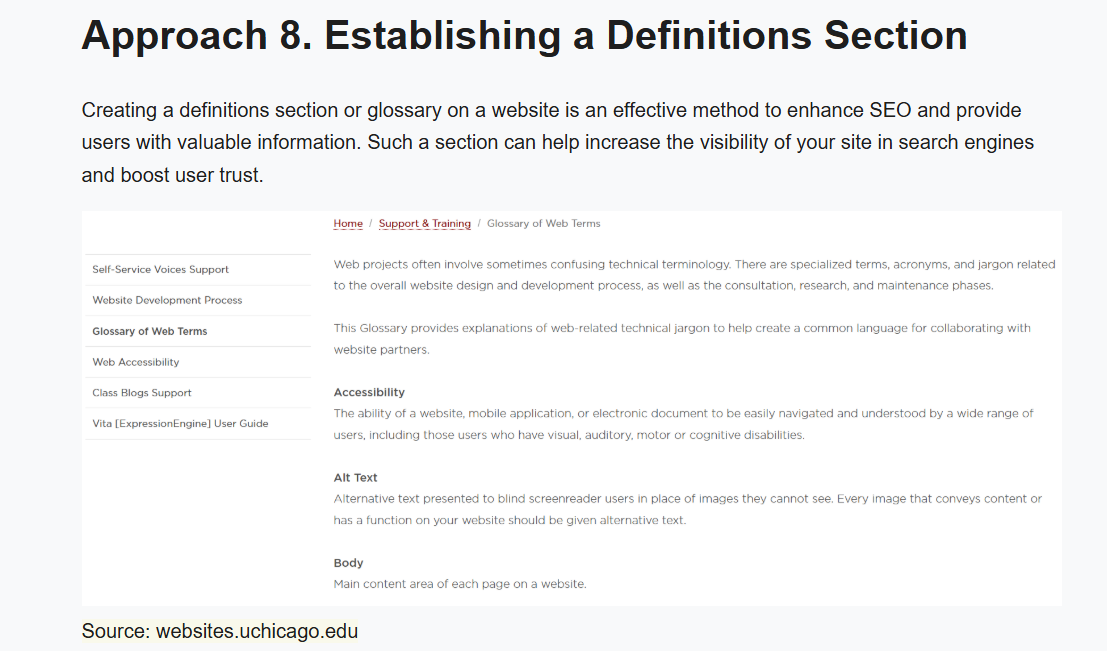 Example of an Image that seamlessly integrates into an Article
The more interesting your resource is to users, the higher its search rankings. This helps the resource appear more frequently in AI results.
List Your Company in Business Directories
When gathering information, neural networks pay attention to data from reference sources. Content from companies registered in industry directories or navigation services is more likely to appear in AI recommendations.
Working on Analytics
Analyze Content for "Humanity"
If you use AI for generation, keep in mind that materials created by a neural network always require refinement. To ensure that automated content is perceived by readers as meaningful and interesting, it needs to be manually edited and given a more human touch.
Sometimes, it may happen that text written by a human is perceived as machine-generated. This can occur if the writing appears too formulaic and the phrases seem unnatural for human speech. Therefore, AI might mistakenly consider the text as generated and ignore it.
To avoid such issues, it is important to steer clear of overly standard phrases and use more lively language. If the topic allows, add a bit of conversational tone.
There are tools available that help check content for "humanity," such as the AI Content Detector service.
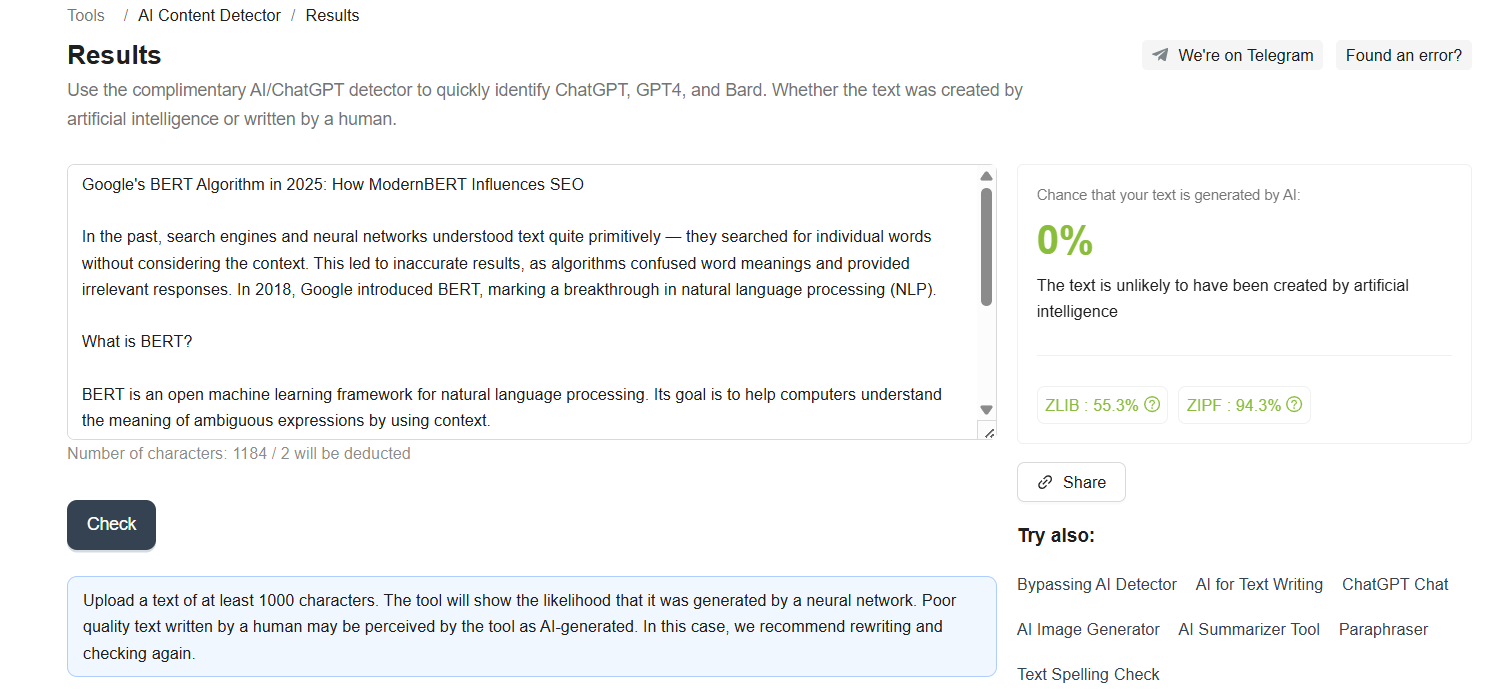 AI Content Detector Interface
Monitor Competitors in AI Search Results
Continuously analyze what AI suggests for your keywords. If your content is absent from the search results while competitors' sites are present, pay attention to their approach. Perhaps they have added up-to-date information, included useful sections, or managed to cover the topic better. This can be a good source of ideas for improving your content.
Another useful method is to ask your questions directly to ChatGPT. Pay attention to the sources from which AI derives its data: sometimes the responses might mention reports or studies. Create similar materials and publish them on your website.
Seek Advice from AI
ChatGPT can suggest how to improve the content structure to increase the chances of appearing in AI search results. Of course, AI responses should be taken critically, but sometimes its recommendations genuinely help in making the article better.
How to Assess the Effectiveness of an AEO Strategy
Frequency of Mentions in AI Responses
- Conduct test queries related to your industry on various platforms that utilize AI responses.
- Use monitoring tools that track how frequently information about you appears in AI-generated answers.
Accuracy of Information in AI Responses
- Ensure that the AI accurately describes your services, products, and business.
- Verify that the links in the responses lead to your official resources.
Number of Website Visits from AI Responses
- Set up analytics to track the source of your traffic. For example, use Google Analytics data to see visits originating from AI responses.
User Engagement from AI-Driven Traffic
- Compare the depth of site exploration and time spent on the site by users who arrived via AI responses against other traffic channels.
- Evaluate whether these users perform targeted actions more frequently than others.
User Feedback on AI Responses
- Monitor discussions on social media, forums, and reviews where users share their experiences with AI assistants.
- Conduct surveys to learn how useful users find the information provided by AI.
Summary
The primary distinction between AEO (Answer Engine Optimization) and SEO is its reader-centric approach. AI can analyze not only the text itself but also its meaning, and understand language at a deep level.
To succeed in AI content optimization, basic SEO efforts are not sufficient. It is crucial to convey your ideas clearly, structure articles well, and support publications with strong arguments.
The better you can achieve this, the higher the likelihood that AI will highlight your content over competitors'. This is a direct path to becoming part of the answers that AI offers to millions of users.
🍪 By using this website, you agree to the processing of cookies and collection of technical data to improve website performance in accordance with our privacy policy.