
What Is Search Intent in SEO: How to Identify User Intent and Optimize Content
Brief Summary
Search intent is the task a person brings to search: to learn, choose, buy, compare, find a website, or solve a problem. For a page to grow in SEO, simply adding keywords is not enough. The format, depth, examples, price, product cards, instructions, and answers should match the user’s expectations and the type of search results.
Who should read this article:
SEO specialists, editors, marketers, website owners, e-commerce content managers, and anyone who builds a semantic core, writes articles, or updates old pages for search intent.
We used and expanded an article by marketer and Backlinko blog author Brian Dean about user intent for beginners.
What Is User Search Intent in SEO
Intent optimization is the practice of making sure that the content, page structure, and snippet help fully satisfy the query — not just include the right phrase.
For example, a user is hungry and wants to cook cabbage. They type “quick cabbage recipes” into a search engine, click a link in the search results, but the page says the recipe takes more than an hour to prepare. The user quickly closes the tab and opens another link that offers a cabbage recipe in 10 minutes.
The second tab, with a truly quick recipe, meets the user’s needs. If enough people searching for “quick cabbage recipe” follow the same pattern, the search engine may move that link higher in the results. Meanwhile, the page with a high bounce rate may be pushed down if the search engine decides it is not relevant.
FAQ Section
How is intent different from a keyword?
A keyword is the wording of the query, while intent is the real need behind that wording. The same keyword can hide different goals.
Can intent be identified automatically?
Tools can help group semantics, but it’s better to check intent directly in the search results: by looking at the types of pages ranking at the top, snippets, search suggestions, and featured answer blocks.
Why User Intent Matters for SEO and Google Rankings
Satisfying user intent is one of the ranking factors in search engines. The click-through rate of a snippet in search results, time spent on the page, and other behavioral factors show the search engine whether the result meets the user’s needs.
Even if a page has good metrics for time on page and click-through rate, but the content does not match users’ needs, the page will not grow steadily. It is especially important to consider the region, commercial factors, clarity of the offer, completeness of the answer, and user behavior after the click. If the result matches the user’s intent, the page has a better chance of improving its positions for target queries.
FAQ Section
Is query intent a ranking factor?
Search engines evaluate not the term itself, but how well the page matches the user’s task: the content format, completeness of the answer, usability, and behavioral signals.
Why doesn’t a page with good text reach the top?
A common reason is the wrong format. For example, for a commercial query, the top results may include catalogs and product pages rather than articles.
What is more important: keywords or intent?
Both elements are important. Keywords help search engines understand the topic, while intent shows what kind of answer a person needs and in what format.
How to Optimize a Website for Search Intent
Identify the user intent behind a keyword. Optimizing a website for search intent helps you build a semantic core without unnecessary pages, choose the right content format, and improve behavioral factors — because users will get exactly what they came to the search engine for.
Usually, intent can be determined by looking at the search results. Check which pages are ranking at the top, which blocks Google shows, whether there are products, maps, quick answers, videos, reviews, roundups, the “Related searches” block, and suggestions in the search bar. Let’s take a closer look.
Study the Search Engine Results
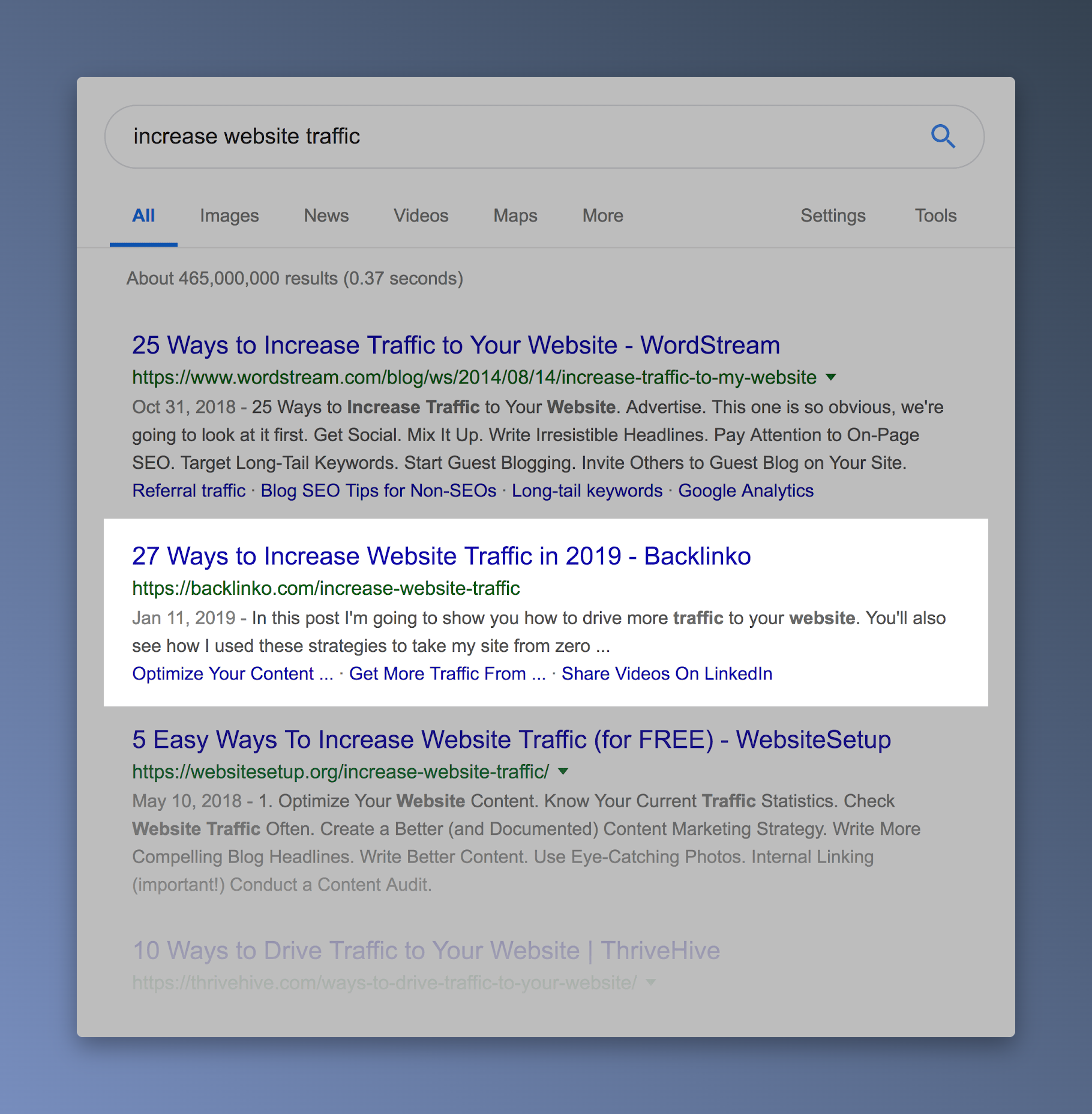
Search results give clues about what people want to see. Here’s a real-life example: Brian Dean published a blog post about ways to get traffic to a website. Before writing it, he checked the results for the target keyword “increase website traffic.” When he looked at the top 10 results, he saw that almost all links led to list-style articles.
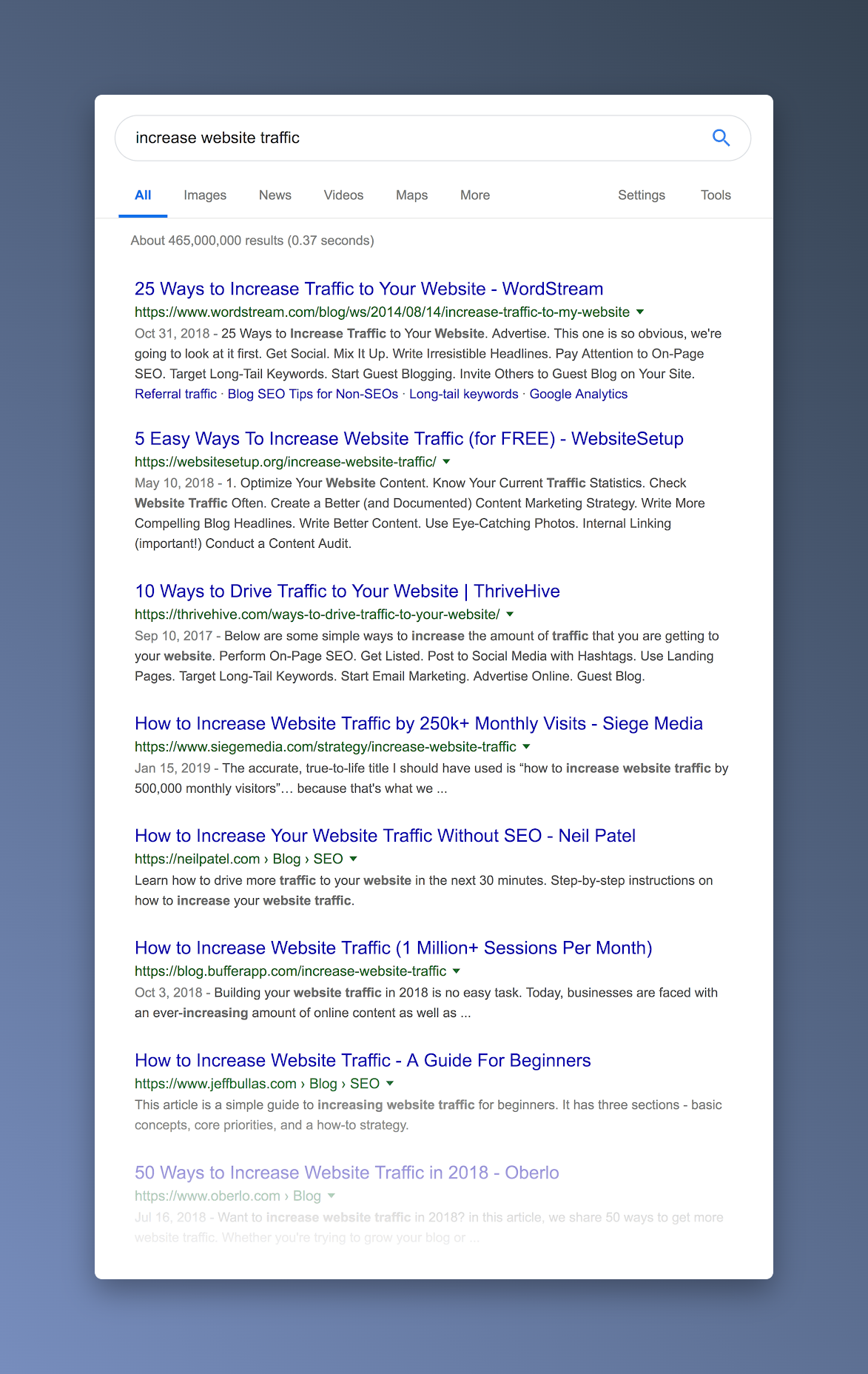
So he decided to structure his post as 27 practical tips. It worked: his page ranks in the top 3 for the main keyword.
To avoid collecting search results manually, you can use Analysis of the TOP results of Google by keywords: it shows the pages ranking for the target queries. Based on the type of these pages, it’s easier to understand which intent prevails — informational, commercial, or mixed.
Update Content Based on User Intent
Ideally, content should be written with search goals in mind from the very beginning. But you can always return to old content and edit it according to user intent. For example, Brian published a huge list of SEO tips. From the perspective of traditional content marketing metrics, it was successful: it received 336 comments and 8,894 reposts on Twitter and Facebook. But its ranking for the target keyword “SEO tips” was not very strong:
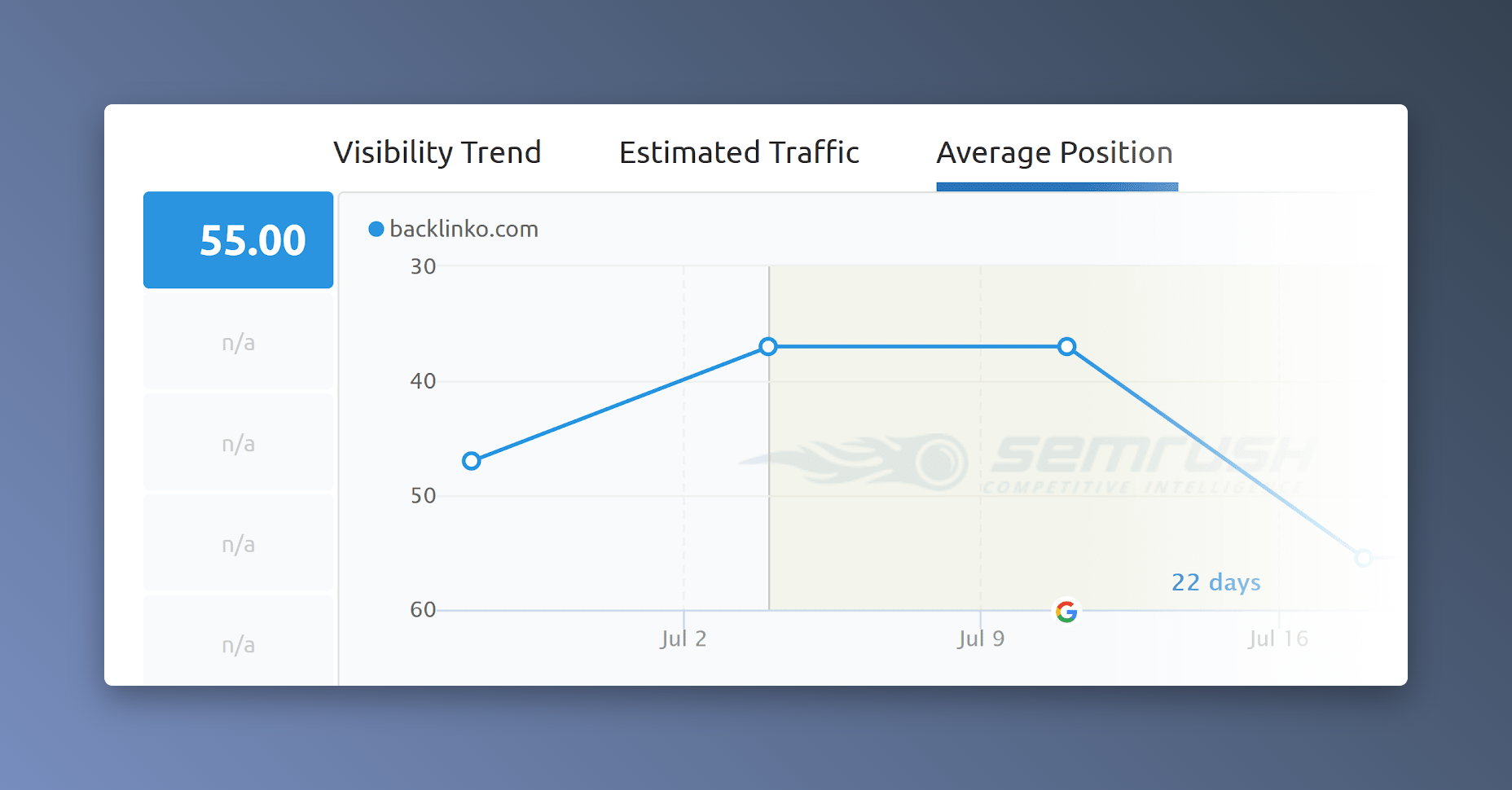
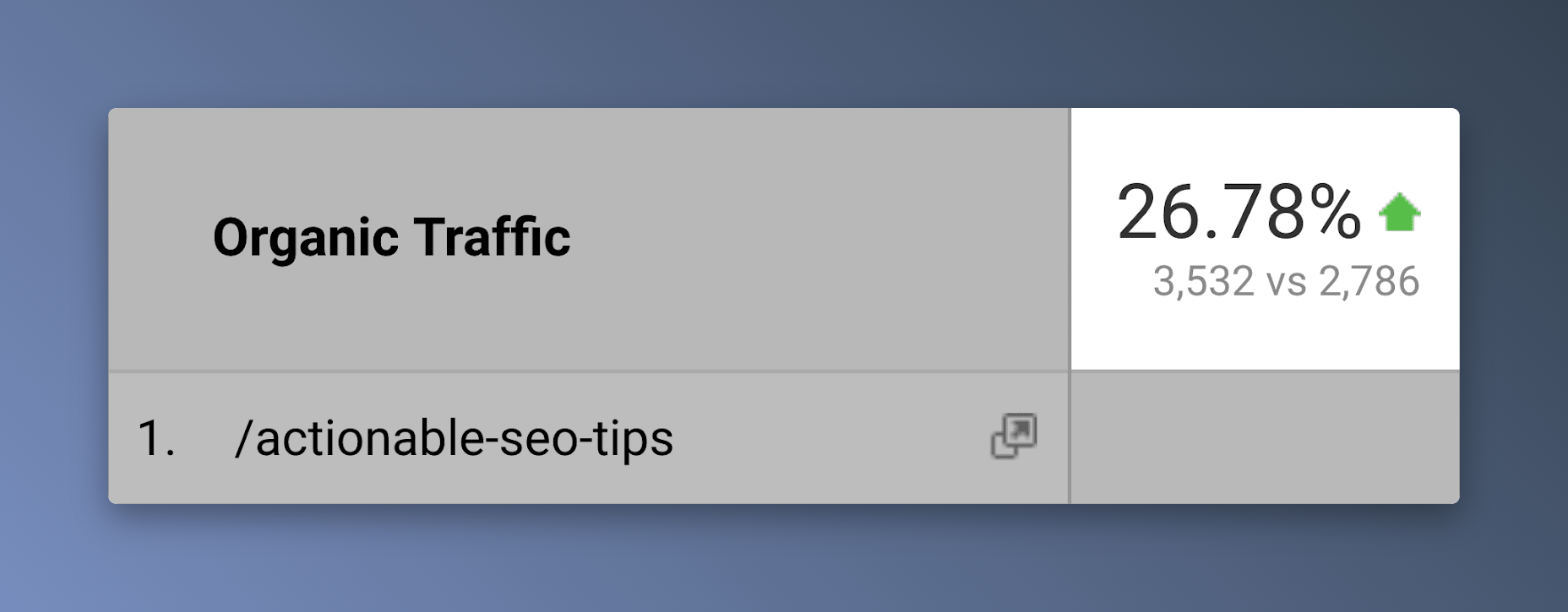
Brian studied the search results for this keyword and realized that people searching for “SEO tips” didn’t need more than 200 tips — they were looking for shorter posts with the most important points. He kept 17 of the most valuable items from the original list, making the post better aligned with user intent. Organic traffic increased by 26.7% right after he published the new version:
To understand intent more deeply, study the “Related searches,” “People also ask,” and featured answer blocks in the search results. They often reveal additional user questions that are worth covering in an article or FAQ.
Related searches and questions in Google SERP tool can help you quickly collect these wordings — it shows related queries and SERP suggestions that you can use to expand the structure of your content.
Divide Keywords by Intent Categories
The previous points help determine the user intent behind a keyword, but it’s also useful to know the type of keyword.
Intent categories:
- informational;
- navigational;
- commercial;
- transactional.
When you know which category a keyword belongs to, it becomes easier to satisfy user intent.
Brian published a guide to Google Search Console and reached the first page of search results for the query “Google Search Console”:
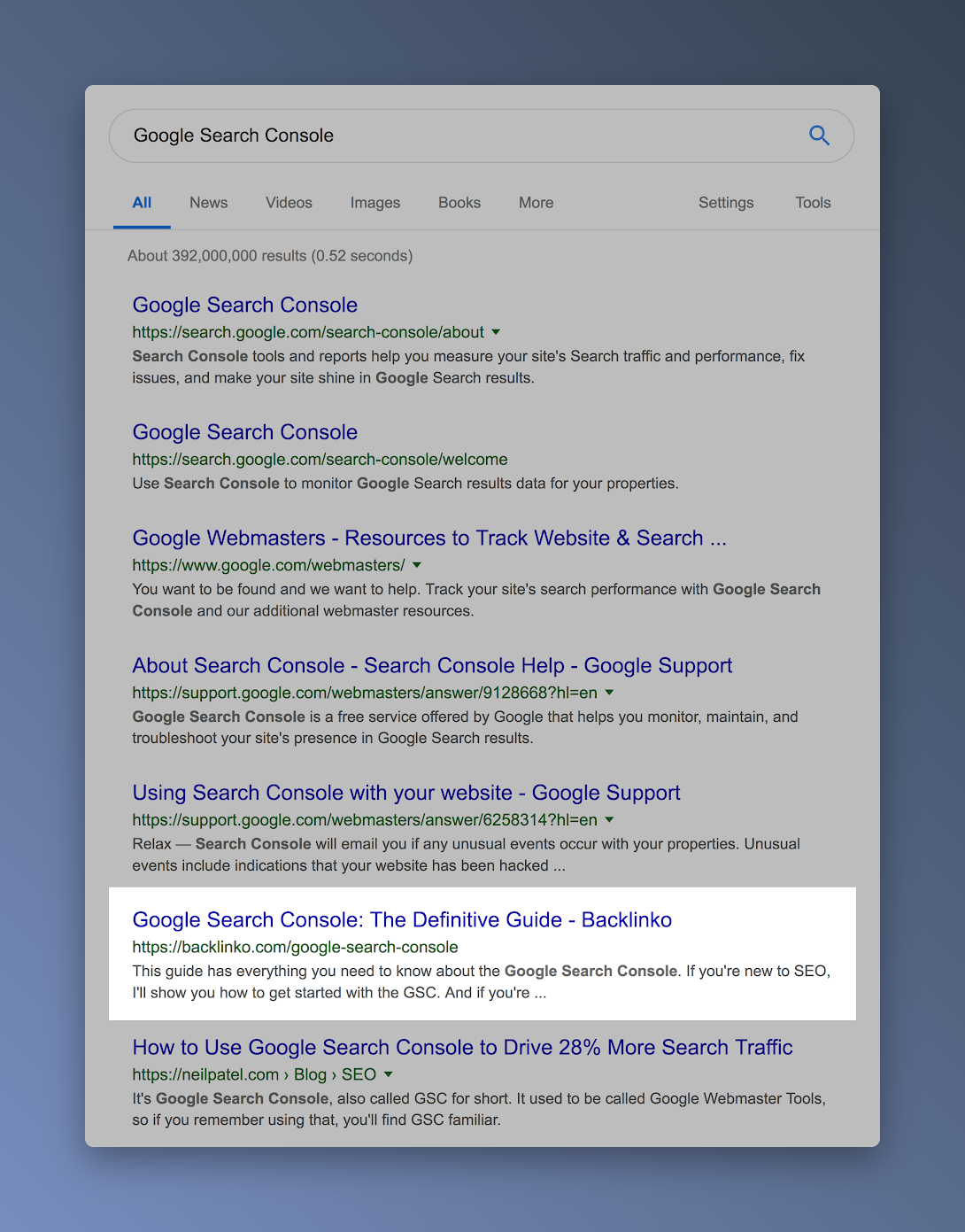
“Google Search Console” is a navigational query. Most people who type it in are not looking for a guide — they are looking for the main page so they can log in to their account. As a result, Brian Dean’s post received many impressions but few clicks:
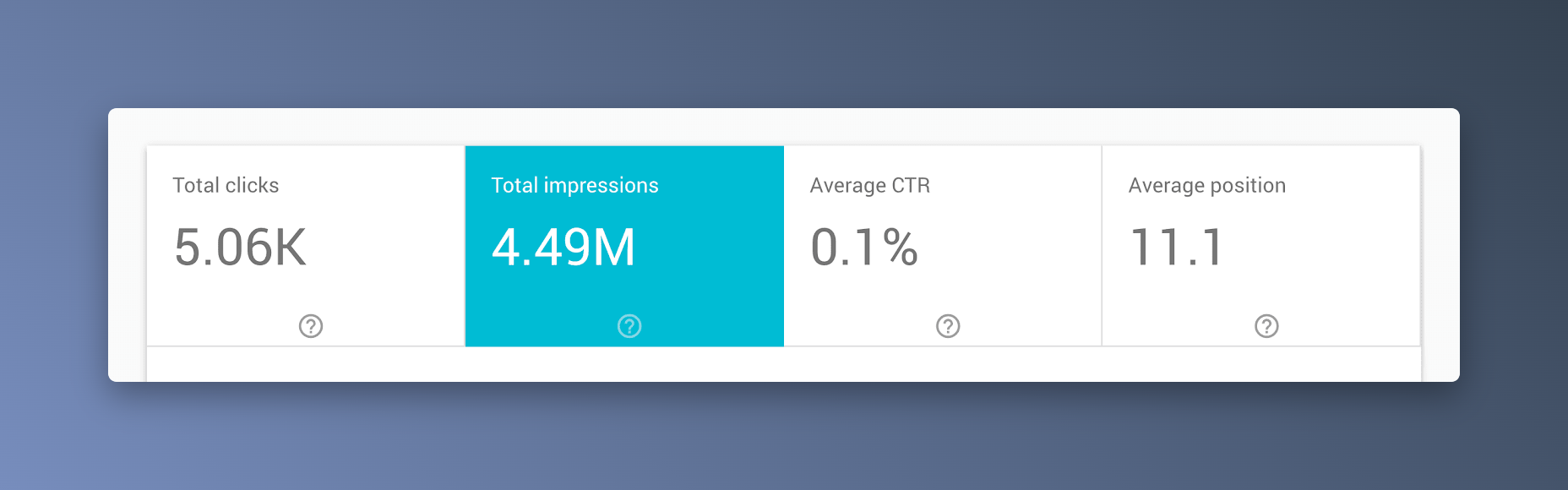
If Brian had taken the time to determine the category of user intent, he would have realized that a guide was not the right content to optimize for this keyword.
If there are many queries, it’s more convenient to group them first using Query Clustering and Grouping. This makes it easier to separate informational queries from commercial ones and avoid promoting one page for incompatible intents.
Keywords with Multiple Intents
Google’s Search Quality Evaluator Guidelines mention that some keywords can correspond to several user intents. Brian recommends choosing one suitable intent from these options and optimizing your content for it.
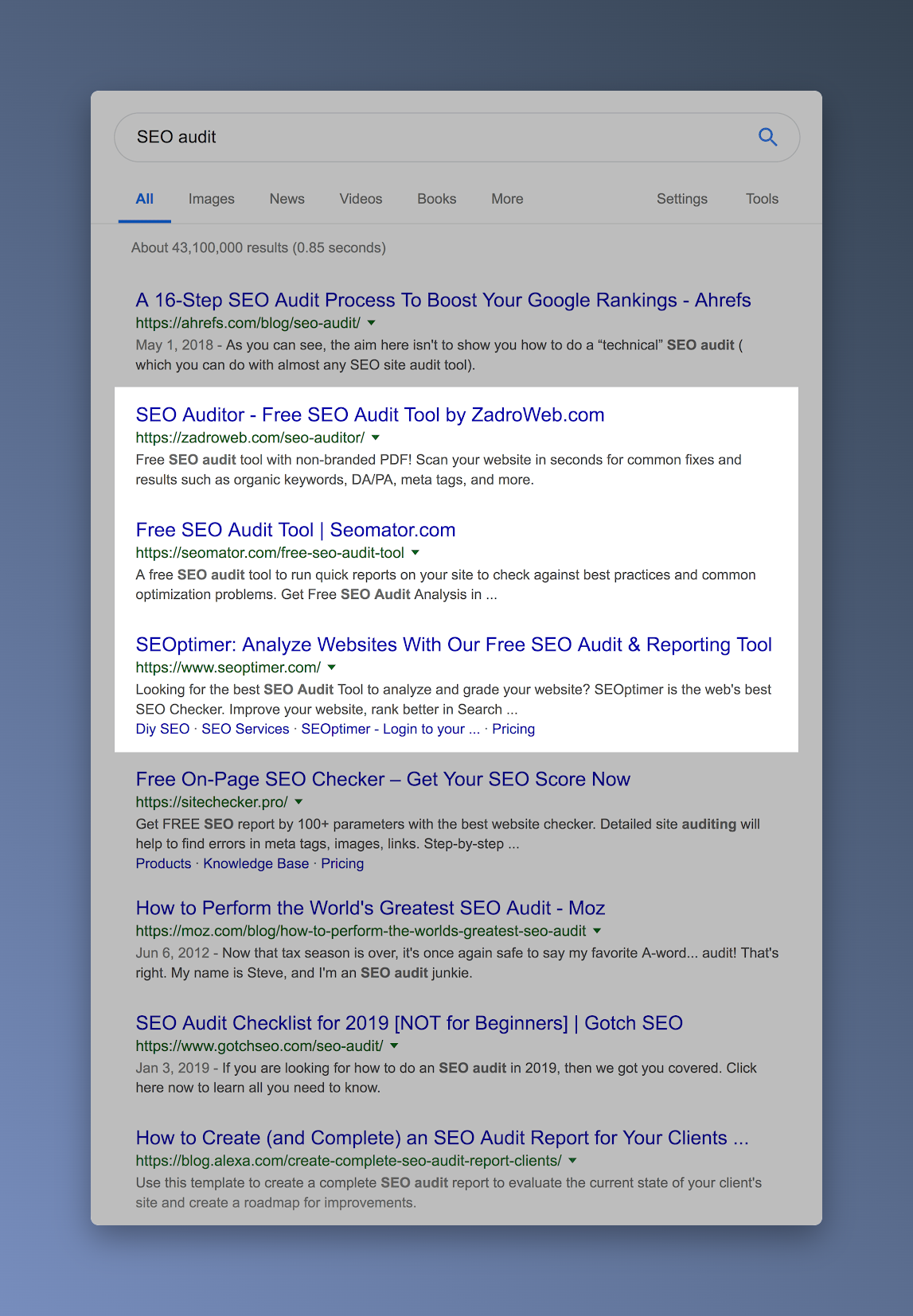
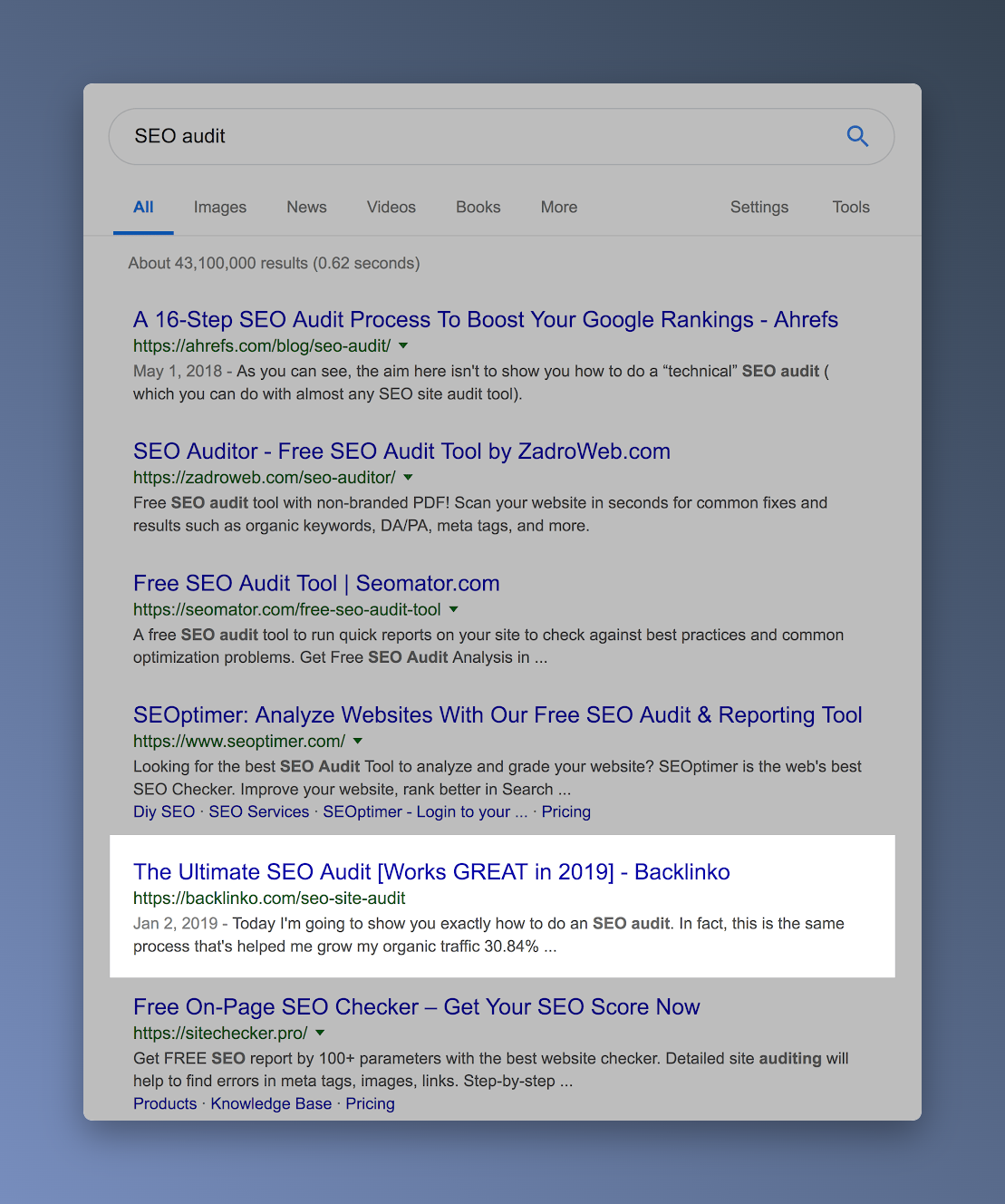
For example, one of his blog’s target keywords is “SEO audit.” In the search results for this keyword, you can see that some users are looking for software:
Another part of the results shows step-by-step instructions for conducting an audit independently:
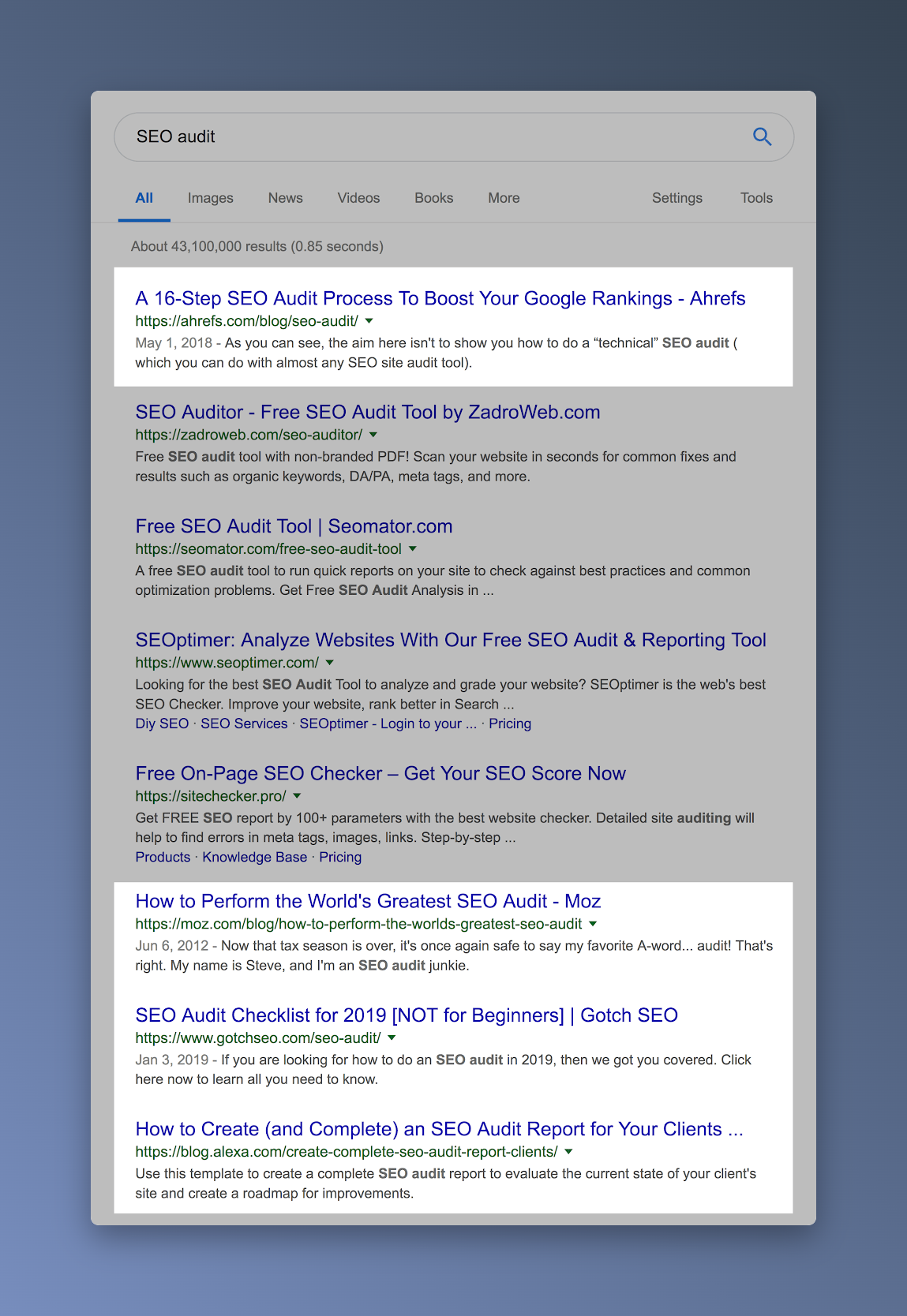
In the end, Brian created a complete guide with detailed steps for performing an audit on your own, and it reached the top 5 in Google for that keyword:
Optimizing for user intent will help improve a page’s ranking for the target keyword: users will get what they are looking for, bounce rates will decrease, and behavioral factors will improve.
FAQ Section
How can you quickly understand the intent of a keyword?
Enter the query into search and look at the top 10 results: if they are catalogs, the intent is commercial; if they are guides, it’s informational; if they are brand websites, it’s navigational.
What should you do with a query that has multiple intents?
Choose the primary intent based on the majority of results in the SERP, or split the queries across different pages so you don’t mix an article, a catalog, and a product page.
*Based on Brian Dean’s article “User Intent Optimization”