
How to Work with SEO in Highly Competitive Niches if You Have a New Website
Working in highly competitive niches is always a challenge, but it is possible and necessary to promote your website online, even if there are thousands of competitors. Let's look at what actions can help you attract sufficient traffic to a new website.
Features of Highly Competitive Niches
Obvious competitive niches include financial services, medical services, real estate, cleaning services, online education, car repair, and various deliveries. Where there is high demand, there will be supply.
Here are some characteristics common to any highly competitive niches:
- High frequency of key queries. The more users enter relevant queries into search engines, the more websites will want to be on the first page of the search results for these queries.
- A lot of advertisements in the search results for key words. Companies invest large budgets to attract customers.
- Many high-quality websites. Well-designed, intuitively structured, with high-quality content—everything that helps gain authority with search engines.
- Active content updates. In the battle for the loyalty of readers and search engines, competitors constantly publish fresh articles, update pages, and experiment with content formats.
- Good external optimization of the top sites. Most likely, your competitors have already built a good backlink profile and established partnerships with resources that serve as sources of authoritative external links.
Let's consider one main and two additional strategies that will help you advance in highly competitive niches without wasting your budget.
Main Strategy: Thoughtful Selection of Semantic Core
To compete with experienced, large players with strong positions and substantial budgets, it is essential to first correctly assemble the semantic core.
Step 1. Analyze Competitors
Select 3-5 competitor websites from the first page of search results on Google and regularly research their sites and content.
Traffic Sources
Pay attention to where and what kind of traffic competitors receive. While exact numbers are hard to obtain, many services provide approximate data.
Website Analysis is one of the services for comprehensive analysis and monitoring of any site, whether it is yours or your competitors':
- It checks the technical and SEO parameters of the site, identifies errors, and provides recommendations on how to fix them.
- It monitors the site’s positions in search engines daily and shows changes over any period.
- It evaluates site traffic, traffic sources, and user behavior.
- It performs an in-depth analysis of all pages to identify duplicates, check load speeds, verify the correctness of meta tags, and other parameters.
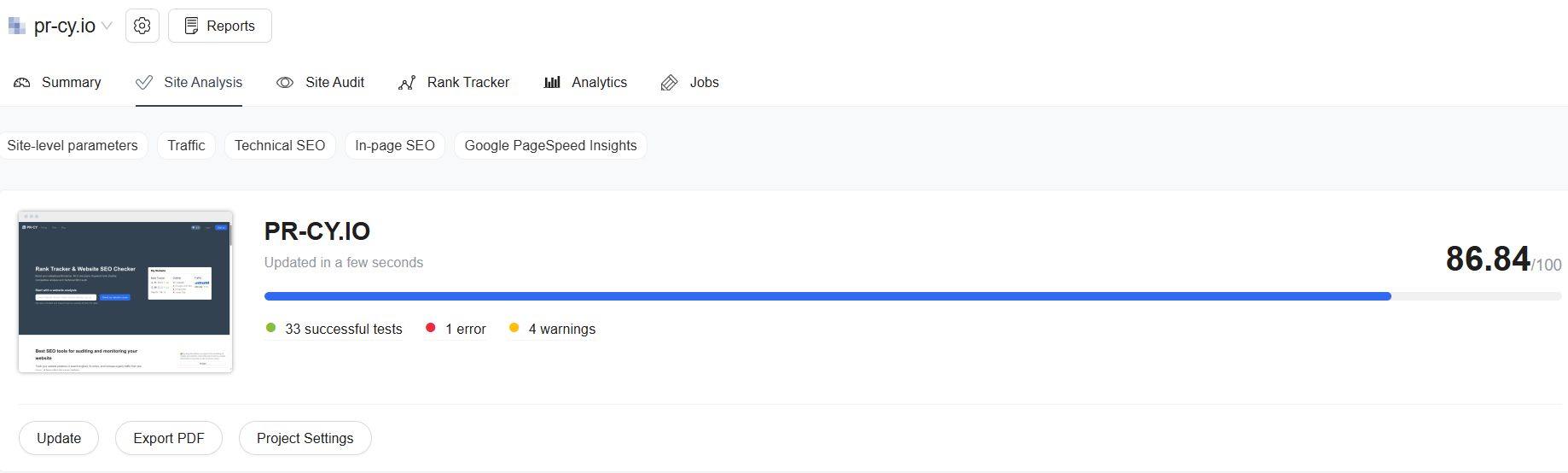 Website Analysis Interface
Competitors' Search Queries
It is important to analyze the keywords for which competitors are ranking. This will help identify new growth opportunities, refine and expand the semantic core, and create more relevant content.
Competitor Keyword Research Tool helps to audit the semantic core of your site or competitors' sites. Insert a link to the site, and you will see:
- The list of keywords for that site,
- The URLs of pages being promoted for those keywords,
- Their positions and the number of impressions.
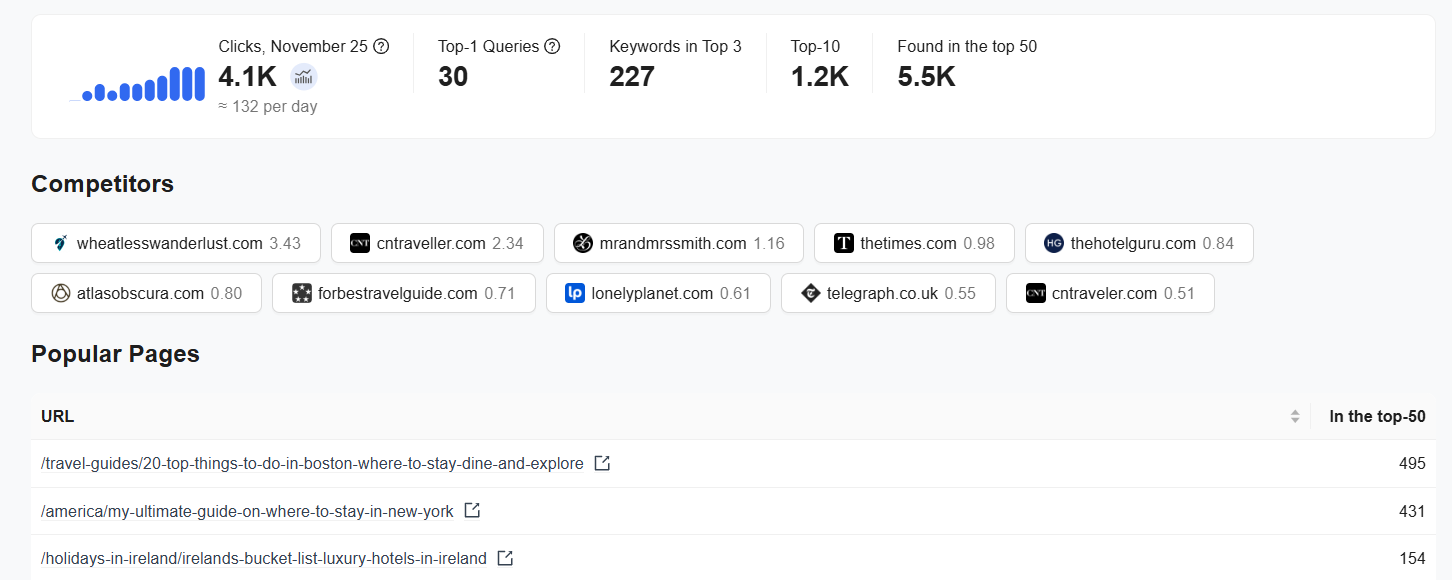 Competitor Keyword Research Tool Interface
Behavioral Factors
These are all the tools, blocks, and functions on competitors' sites that have influenced user behavior and, therefore, can potentially make your site more attractive. Examples include:
- Engagement tools: Filters, calculators, buttons, quizzes, surveys, "buy together with this item" blocks, and other elements that increase the time spent on the site and conversion to further actions.
- Navigation improvement: A convenient mobile version, easy order placement, and user-friendly product selection menu.
It is crucial to track changes that have positively affected competitors' site positions and then test and implement them in your own promotion strategy. The golden rule of SEO is to first replicate what competitors do and then do it better.
Step 2. Focus on Low-Frequency Queries
Why low-frequency queries? It might seem paradoxical since we're discussing working in a highly competitive niche.
The fact is that competing with major players for high-frequency queries in search engines is almost impossible: search engine algorithms favor well-established and authoritative resources.
However, large websites are not always meticulously optimized for low-frequency queries. This is your opportunity to occupy open positions.
For instance, if you run a small online curtain store, winning over giant marketplaces for popular queries like "buy curtains" is nearly impossible. But for specific niche queries (e.g., "classic straight velvet curtains"), it is quite realistic to reach the top positions in search results.
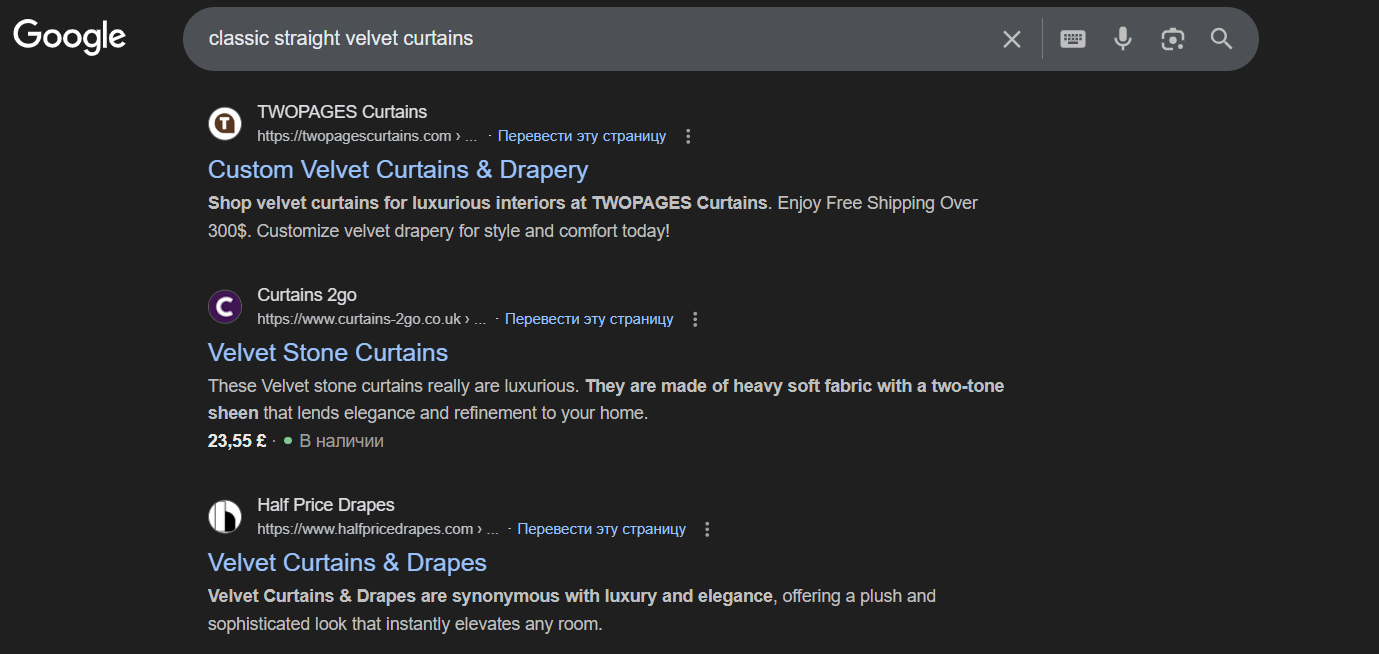 Google Search Results
How to Quickly Evaluate the Potential of a Query
There is a formula that can help calculate whether it is worth investing effort into a particular query. Here’s an example of such a calculation:
- Check the query frequency (for example, 160 queries per month).
- Estimate the approximate CTR (Click-Through Rate) from the search. This greatly depends on the industry and the website's positions. If you already have a website, you can estimate its CTR in Google Search Console.
- Multiply by your website's conversion rate (let’s say 10%) and the average order value.
This way, you get an approximate revenue figure from the position. This information helps determine whether it is worth investing money and time in promoting and optimizing for this query.
Even if the query frequency is low, working with it can be beneficial if the competition for the query is very low and the product has a good profit margin.
When you achieve good positions for low-frequency queries, the overall ranking of your website in the eyes of search engines will improve. In the long run, this will make it easier to secure high positions for medium- and even high-frequency queries.
Step 3. Address Information Requests
Users do not only enter commercial queries (such as "where to buy velvet curtains"), but they also search for information — for example, "how to hang curtains?" or "how to properly wash velvet curtains?"
By regularly publishing useful content addressing informational queries, you increase your audience and strengthen your positions in search engines. Most importantly, informational queries naturally convert into commercial ones.
Even if a person is not ready to make a purchase at the moment, they are interested in getting an answer to their question. With well-placed links to other sections of your site, recommendation blocks, and buttons with subtle calls to action, an informational article can become the top stage of the sales funnel.
For instance, a person searching for how to best wash velvet curtains might become interested in your catalog, promotions, or additional services — such as a designer's visit, custom tailoring, etc.
Here’s how and where to find topics for informational queries.
Direct Collection of Feedback from Your Clients
Add a widget on the site with questions about the quality of the current content and the possibility to suggest a topic for an article.
Include an additional question about content in the classic customer satisfaction survey (NPS).
If you have customer support, save the most frequent user queries — they can also become topics for publications.
Searching for Information on External Resources
Monitor forums and other platforms where topics in your niche are discussed.
Analyze the questions on these platforms — especially those that remain without quality answers.
Analyzing User Behavior on the Site
If your site has a search function, analyze the internal queries — check if the answers to those queries are available on your site.
Use heat maps to track audience behavior on pages: determine which content generates more interest and what users skip.
Once you have worked on the site’s semantics, you can proceed to supplementary strategies.
Additional Strategy 1. Optimization of the Website for Local Queries
Specific address, district, metro station, hours of operation – focus on attracting customers who are in your immediate vicinity and are interested in services or goods here and now.
What needs to be done:
- Use keywords related to your location in page titles, meta descriptions, and texts. This helps the site appear in local search queries.
- Publish articles and materials that are relevant to the local audience. For example, reviews of local events or case studies.
- Ensure that the site is optimized for mobile users: it loads quickly and is easy to navigate.
Make sure that your business profile on various aggregators, maps, online directories, and listings is fully completed: accurate company name, address, nearest metro station, phone number, and hours of operation.
Additional Strategy 2: Building Link Weight
Using the link weight of other websites when your own is insufficient is a traditional method of promotion at any stage of a website’s development, but at the start, it is the best way to boost your site.
Competitor Link Profile Analysis
By evaluating which websites link to your competitors, you can identify promising platforms for placing your links and strengthen the authority of your own resource.
Backlink Checker can assist with link profile analysis. It will assess the quality of a domain's link profile, check the level of spam, and display the latest and most valuable links.
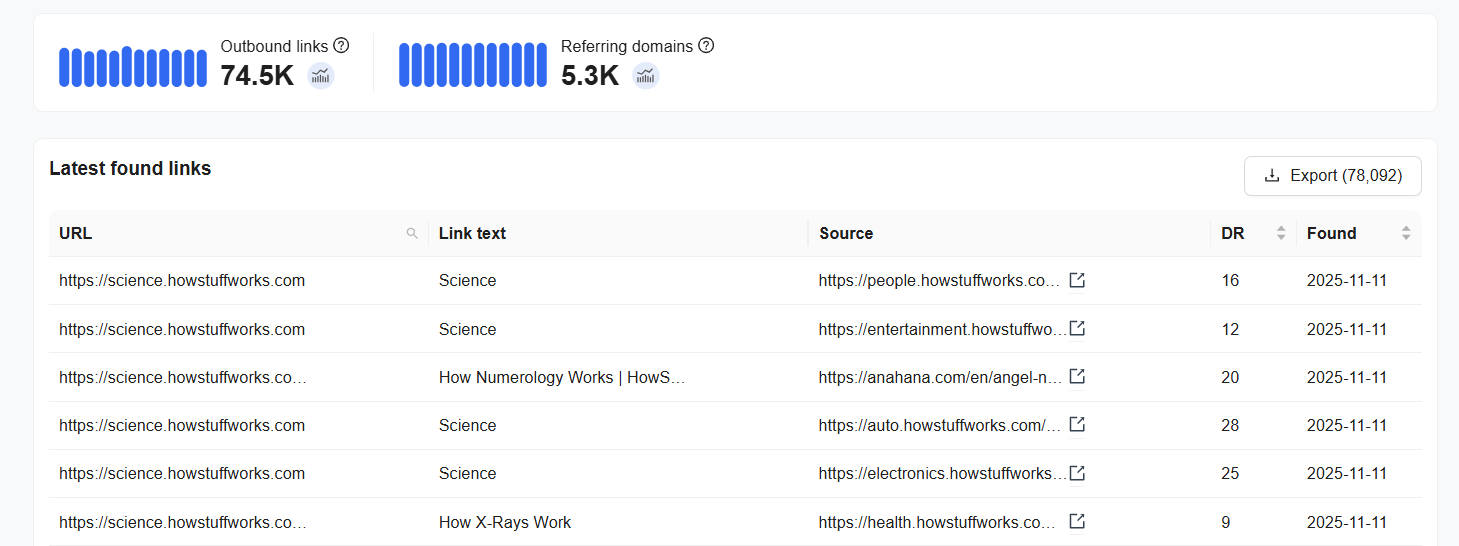 Backlink Checker Interface
Working with Aggregators
These are websites that gather content from other sources, process it, and publish it in a convenient format. Examples include various review sites, maps, thematic aggregators (travel directories, sports equipment, tool rentals, etc.).
Fill out the information about your company on aggregators as thoroughly as possible. The more information you provide, the higher the chances that readers will follow the link to the original source of information—your website. Each click is a positive signal to search engines.
Engage actively with reviews on aggregators: ask satisfied customers to leave positive reviews and respond promptly to negative ones.
Obtaining Backlinks
Publications with links to your site on blogs of well-known individuals or authoritative platforms increase trust in your site and help attract direct traffic. There are two main tactics for working with backlinks—classic outreach and buying links on exchanges.
Here are some tips for effective outreach:
- Remember that partners should be thematically related to your product but should not be your direct competitors.
- Launch joint content projects with industry communities, associations, or clubs. Such interest groups are valuable for their unique audiences and high trust from search engines.
- Consider collaborating with educational institutions (if relevant to your business theme). They often have authoritative domains, and organizing joint events, lectures, or research can lead to mentions and publications with links to your site.
- Set measurable goals for your outreach campaign: for example, no less than 100 qualified leads.
- Add UTM tags to track results — you need to clearly understand whether there is progress, what benefits outreach brings, and if it is effective. If there are no results, reconsider your partners or content.
Purchasing links on exchanges is a common yet disapproved practice by search engines. This strategy has its pros and cons, which should be considered.
Starting with the pros:
- It speeds up the process of obtaining backlinks, which is particularly relevant for new websites. You can immediately strengthen your position in search results and attract traffic.
- You can purchase links from sites with high link weight and traffic, which will enhance the authority of your resource.
Now, the cons:
- By buying links, you risk encountering sanctions from search engines. If their algorithms detect that many links are leading to your page from a single query, it will become apparent that you are using unethical methods, and your site may be banned.
- You need to spend time on analytics to ensure that the link comes from a trustworthy resource.
Remember that purchasing links should only be one part of an overall promotion strategy. When building link mass, focus on using quality content and active engagement with communities and opinion leaders.
Checklist: How to Work with SEO in Highly Competitive Niches
Conduct a Competitor Analysis
- Identify 3-5 main competitors in each niche you aim to promote.
- Evaluate the sources and shares of your competitors' traffic.
- Gather and analyze their key queries.
- Identify new elements on competitors' websites to improve behavioral factors.
Develop the Semantic Core of the Website
- Determine the main, medium, and low-frequency queries for promotion in your niche.
- Assess the potential of the queries.
- Prioritize low-frequency queries with sufficient potential benefits.
- Work on informational queries.
Start with Local SEO
- Include the district, metro station, or location in headlines and texts.
- Create content with a local focus (case studies, local events, client stories).
- Ensure the accuracy of contact information across all maps and directories.
Work with Aggregators and Reviews
- Add your company profile to all popular aggregators and fill out the information in detail.
- Encourage clients to leave reviews on these platforms.
- Respond to comments and quickly address negative reviews.
Work with the Link Profile
Outreach
- Set specific, measurable goals.
- Identify bloggers, experts, and thematic websites for link placements and articles.
- Create personalized proposals for each partner.
Link Purchase
- Compile a list of priority pages and queries for link purchases.
- Choose an authoritative marketplace.
- Check potential donors for quality.
- Prepare high-quality and unique content for integration.
- Gradually build up your link profile.
- Remove problematic and low-quality links.
🍪 By using this website, you agree to the processing of cookies and collection of technical data to improve website performance in accordance with our privacy policy.